
Scaling SaaS Topologies: Best Practices for Enterprise Microservices
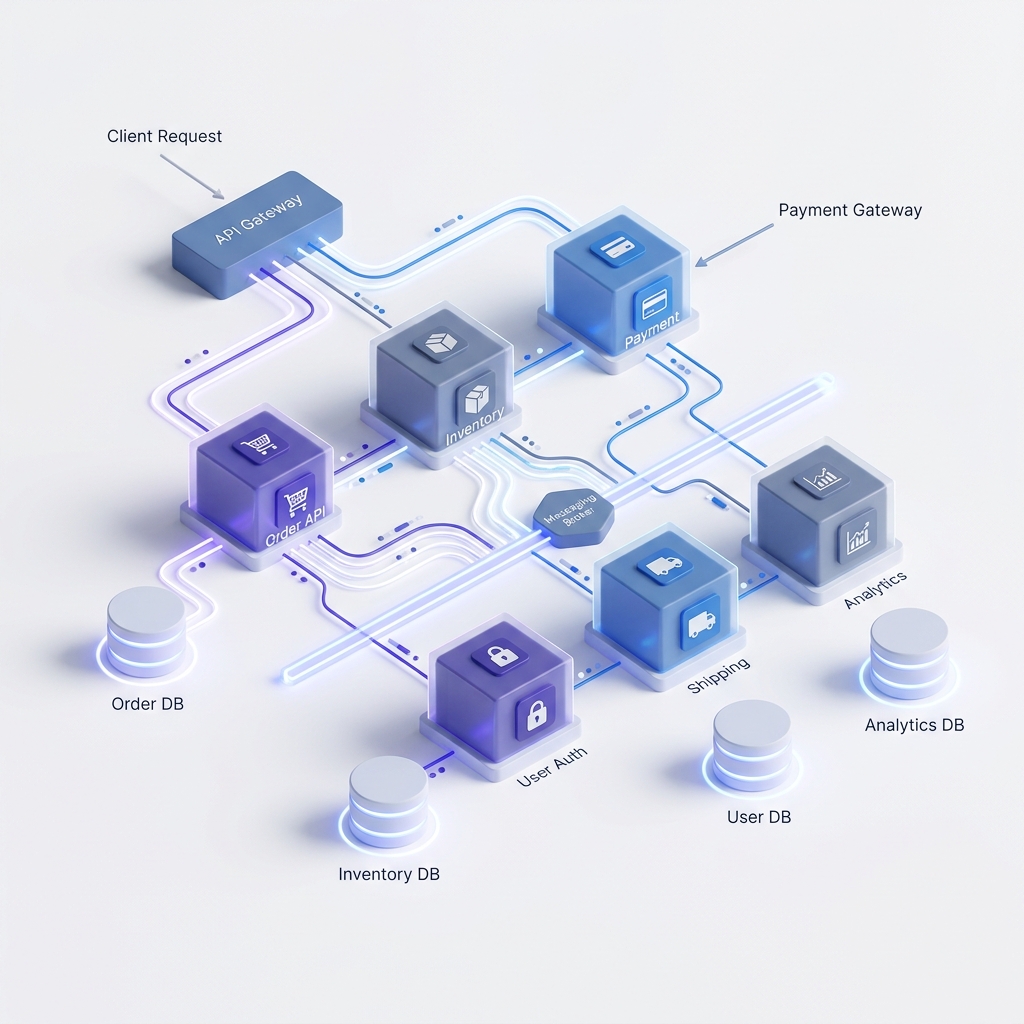
Building enterprise-grade SaaS platforms requires a deep focus on architectural separation, data isolation, rate limiting, and microservices design. Regulating how data streams flow between services prevents system collapses during sudden user traffic spikes.
1. Decoupling the Core with Microservices
Legacy monolithic structures make rolling out new updates risky. Splitting application boundaries into self-contained services (e.g. Auth, billing, notifications) using API gateways allows development teams to release code continuously without affecting the entire system.
"A distributed network is only as strong as its fallbacks. Implementing circuit breakers and queue buffers is essential to prevent cascading failures."
2. Multi-Tenant Database Topologies
Enterprise SaaS buyers demand strict data privacy. Select between logical separation (shared database with tenant ID indexes), schema-level isolation, or physical database separation depending on compliance requirements. Use database connection pooling to scale memory overhead.
3. API Gateway Management & Rate Limiting
Protect downstream application endpoints with a central gateway middleware. Configure token bucket rate limits, validate auth states at the edge, and log payload sizes to intercept denial-of-service attempts before database queries run.